
More Harm Than Good
A Conversation with My Daughter about Prostate Cancer Screening


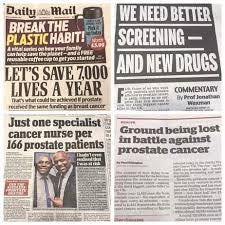
Last week, the UK National Screening Committee rejected calls to introduce routine PSA screening for all men. For many people, this sounds baffling. Prostate cancer is the most common cancer in men in the UK. It kills more than 12,000 men a year. A simple blood test sounds like common sense.
But screening is not just about finding disease. It is about whether finding disease helps more people than it harms. “Do no harm,” is the Hippocratic oath’s first principle. Doctors sometimes graduate reciting it.
According to the BMJ, for every 1,000 men aged 50-60 screened with a PSA test, up to two lives would be saved, but over diagnosis would occur in up to 20 men, including 12 who would be likely to be over treated.
Over treatment is not a small thing. In prostate cancer, it can mean unnecessary surgery or radiotherapy, with possible incontinence, impotence, anxiety, and lifelong consequences from a cancer that may never have harmed him.
This is a difficult argument coming from me, Richard Spicer FRCS, 82, a retired surgeon currently looking down at once very useful legs now worse than useless thanks to a rogue tumour in my spine. Less than a month ago, it paralysed me from the chest down. I have lost normal bladder and bowel function. Until very recently, I was still walking my dog up the steep hill behind our house onto Salisbury Plain, a hill Kate calls “vitamin hill” for its cardiovascular benefits. The night before I was admitted to hospital I was poorly but enjoying a night in the pub over the road where diverse and wonderful group of local friends like to gather and laugh, talk and argue about everything, always amiably, even politics.
My six children and my wife have been left with a lot of “whatiffery” about my refusal to have a PSA test since it was first introduced in the 90s, when I was in my forties
Not me. None of this has changed my mind.
Kate Spicer: You are 82 years old, a retired cancer surgeon, and you are dying of prostate cancer. Bit of an odd place from which to argue against mass testing, isn’t it?
Richard Spicer: True, that I am no longer in a theoretical position on the subject. I am paralysed from the chest down. District nurses now have to come and attend to matters which, for most of my life, I dealt with quite efficiently myself.
My bowel leaks. There are suppositories. Movement is restricted in a way most people can’t imagine. There are all sorts of practical interruptions and indignities. In fact, we are going to have to press pause because a nurse has just arrived to change my catheter pad.
None of that changes the argument. I understand why people might expect me to say: test everybody, now. But I still do not think routine PSA testing for all men is a good idea.
Ever since PSA testing came in during the 1990s, I thought it would be unwise to introduce it widely. Not because prostate cancer does not matter. Obviously, it matters very much. But because the test is not accurate enough, and because the chain of events it sets off can do harm.
A screening programme is not good simply because it finds abnormalities. It is good only if, overall, it helps more people than it harms.
KS: What is the problem with PSA?
RS: PSA is a blood test. A raised PSA can mean prostate cancer, but it can also mean benign enlargement of the prostate, inflammation, infection, or other non-cancerous things. Some men with prostate cancer have a normal PSA.
So it is useful in the right clinical context, but not reliable enough, in my view, to be used as a mass screening test.
The danger is that once a test suggests cancer, men are sent for biopsies, scans, and sometimes treatment. Some of those cancers would never have troubled the man who had them. But once found, they trouble him very much.
KS: This is the part most non-medical people find hard. We all think finding cancer early is always better.
RS: Yes, and I understand that. People like to think cancer is a lump which, if cut out early enough, is dealt with. It is not as simple as that. Nothing ever is.
Cancer is not one disease. I spent my professional life operating on cancer, mostly in children, and one of the first things you learn is that tumours behave differently. They have different biology, different natural histories, histologies, and different responses to treatment.
By the 1980s I had completed adult surgical training, and had also spent ten years as a child cancer specialist. That gave me a fairly wide experience of adult and child cancers, and they are not the same thing. Children get different cancers. Children are also much more tolerant of treatments that adults find hard. Cure rates in paediatric oncology are about 85%; in adult oncology, because the biology of the tumours and the biology of the patients are different, it’s around 30%.
I have seen a child with an adult-type tumour and brought in an adult specialist. I have also been pulled in to deal with child-type tumours in adults. The same label can mean very different things.
Some prostate cancers kill. Some sit there doing very little. I have always told you, many men die with prostate cancer, not of prostate cancer.
Other screening programmes have a clearer path from detection to useful treatment. Cervical cancer screening has an accurate pathway, effective treatment, and now vaccination. It should be close to entirely preventable. Bowel screening is also logical, because early treatment can make such a difference, while treating it once it has spread is much more difficult. Breast screening took a long time to prove that it did more good than harm.
Prostate cancer has never been like that.
You cannot say definitively that early treatment will prevent it recurring. And even in good hands, prostate surgery can cause incontinence and impotence. In less good hands, even more so. We don’t have enough good hands in this country for a start.
When I was 40, I did not want some urological surgeon operating on my prostate and causing incontinence or impotence unless there was a very clear benefit, and that I could not see.
KS: You told me a story about treating babies based on mass screening in Japan, which seems to explain the danger of screening better than almost anything.
RS: Yes. Neuroblastoma.
That is a very good example of diagnostics racing ahead of understanding.
Neuroblastoma is a childhood cancer. It can be very serious, but there is a particular form in babies under one year old called stage 4S neuroblastoma. It is an odd thing. Stage 4 usually means a tumour has spread outside its organ of origin, which sounds as if it must be disastrous. But in babies under one year old, the “S” group behaves differently. Around 50% spontaneously regress.
In other words, the cancer can disappear.
That is biologically explained. It is not magic. These tumours have particular oncogene patterns that are different from the more aggressive forms. But unless you understand that, the idea of stage 4 cancer in a tiny baby is terrifying, and the impulse is to treat.
The Japanese screened a whole population of babies by squeezing urine out of nappies and testing it for neuroblastoma markers. They found far more neuroblastoma. They approximately doubled the incidence.
Find twice as much cancer and people think, wonderful, we have cured twice as many babies. But if half of those tumours would have disappeared on their own, what have you really done?
Unfortunately, very unfortunately, many of those babies were treated as a matter of course. And there was significant mortality from treatment.
That is the terrible bit. Some children were harmed, some died, and from treatment for tumours that might never have harmed them. That is what the prostate screening issue is about. Needless and harmful treatment.
It took countries such as the UK, France, and Canada to resist the urge to treat and instead observe this population of babies and see what happened without treating them all. Some tumours grew and then regressed. Some disappeared. The outcomes were better because there were no treatment-related deaths in children who did not need treatment.
So there you have the central problem in very stark form. Finding the cancer was not the same as helping the child. It may have done the opposite.
KS: That is such a brutal example because it involves babies not stubbly middle-aged and old men. It makes the screening argument sound much less abstract, much more real.
RS: Yes, because it shows the error very cleanly.
People think that once a disease is found, treatment must follow. But sometimes the simple act of finding something is enough to change the patient’s life. It changes the parents’ life. It creates a terrible fear. Then it drives action. And action, like a lump, is not always benign.
In neuroblastoma, the biology mattered far more than the “cancer” label. The same word, cancer, did not mean the same future in every baby.
That has been one of the lessons of my career. The name of the disease is not enough. You need to know what sort it is, where it is, how it behaves, what the patient can tolerate, and what harm your treatment may do.
That is why I am so wary, quite angry even, of screening slogans.
KS: You said something quite interesting and rather snooty. That men who choose observation rather than treatment tend to be doctors, or unusually intelligent.
RS: Yes. That sounds pompous, but it is also true.
Some men can live with uncertainty. Others cannot bear the thought that there may be a cancer in their body, even if it is not behaving aggressively. I do not blame them. Cancer is a frightening word.
But it is noticeable that when men with low-risk prostate cancer are offered to be observed rather than to receive immediate treatment, those who accept observation are often doctors, or my pompous sounding “unusually intelligent” and well-informed patients.
Doctors are often more conservative patients because they have seen the downside of intervention. They understand that the cancer may be present without being the thing that kills them. That is not an easy thing to live with. But life throws many challenges at us, and cancer is one of them.
People who opt to have things done are often the people who cannot stand the anxiety that there might be cancer in their body.
We live with cancer in our body. Cells go wrong. Abnormalities exist. Not all of them kill us. Sometimes the body can manage the problem.
I repeat, policy should be driven by evidence, not by the “triggering”, as you kids say, nature of the dread word cancer.
KS: What are the possible harms of treatment?
RS: If I had been screened five years ago, and a localised prostate cancer had been found, I would not necessarily have wanted it treated.
I would have been looking at a lifespan in my early eighties, which is where I am now. I would not have wanted to exchange those years for possible loss of sexual and urinary function.
That is not me being brave or bloody minded. It is an informed calculation.
If I had been picked up with a localised prostate tumour and a good quality operation had rid me of it, I might still be walking my dog. That is possible. But even two years ago, if the price of finding it and treating it was losing sex and bladder control, I would have preferred not to know.
KS: But this is also where it becomes emotionally difficult for us, the family.
RS: I know. This is the part you find difficult.
You are not thinking about population screening. You are thinking about me and my useless legs. I understand why you ask whether a PSA test might have changed all this.
It might have done. That is the truthful answer. But the “might” is mighty important here.
KS: Did you have symptoms? Did you ignore anything?
RS: I had mild prostate symptoms, as most men do when they get older. A weaker urinary stream is usually benign prostatic enlargement, not cancer. Most people with those symptoms have benign enlargement. My prostate was still small.
I did not ignore serious symptoms when they came.
The serious symptom was fixed bone pain.
KS: You were very concerned about fixed bone pain, I saw the concern written on your face.
RS: Any kind of fixed bone pain is a matter of concern.
In 1963, as a medical student at Guy’s, I was taught many anatomical mnemonics. A lot of them were very rude. Kate chose to delete the one for the branches of the cranial nerves and said it would “never” be used in a medical newspaper nowadays. But the one for cancers that spread to bone is clean.
All begin with “Br”: breast, bronchus, bryroid, bridney, and brostate. That is to say: breast, lung, thyroid, kidney, and prostate.
I was taught that by a trainee surgeon working as an anatomy demonstrator at Guy’s. Later, at Southampton Medical School, I was a foundation demonstrator in human morphology myself, pointing at bits on cadavers and teaching mnemonics. Surgeons are anatomical creatures. Physicians are less interested in anatomy, because their practice is not so anatomy-based.
All those mnemonics are tucked away somewhere in my brain, but that Br one surfaced and circled round my brain like a lurking crocodile when my bone pain started.
KS: When was that?
RS: October 2025. I was already under follow-up for renal cancer at Salisbury. That follow-up involved CT scans, and the CT scan had come back normal.
But I had bone pain, and I said that needed checking.
My GP arranged a bone scan.
It came back lit up like a Christmas tree. My PSA was over 300.
I was not surprised. I took it as something that happens to 82-year-old people.
KS: What happened after that?
RS: The oncologist talked about treatment giving me at least two years of good quality life. That seemed reasonable, provided it did not involve heavy chemotherapy.
I responded well to hormone treatment, except for one rogue secondary in my thoracic spine, around the fifth thoracic vertebra, which did not respond. I knew that could happen, though I did not expect it.
In March, my right leg stopped behaving normally. I was not walking in a straight line. I had to start using a stick. Then came loss of sensation. I still walked the dog, but increasingly slowly and with a walking stick, then with someone at my side.
It was decided I should have radiotherapy to reduce the rogue thoracic tumour. The swelling from that, I suspect, precipitated paralysis in both legs. Surgery was considered too risky. Radiotherapy was the only realistic choice of treatment. I had high-dose steroids to reduce swelling. And then my legs went and I was rushed to RUH and have been, pretty much, confined to a bed since, or swinging from a hoist, or some other undignified circumstance. I try to make light of it, what else can you do?
KS: That was when the reality of this hit me like a club to the head, seeing you struggling to walk. You have always been such a physical Dad. Sports, lots of wrestling and wurdgling when we were kids. Mad New Year’s Eve discos with all the boys in wigs. We are all used to you being our robust, surfing, sailing, singing, swimming, walking, dancing, chainsawing, clever, sociable, fun, curious and sometimes very silly Dad reduced to, um, this horrible shitty shit shit situation.
RS: The result is that everything below the level of the fifth thoracic vertebra has ceased to be under my command due to the tumours causing spinal compression.
KS: You have made quite clear decisions about what treatment you will and won’t have now.
RS: Yes. Two weeks ago I stopped treatment that was no longer controlling all the disease. There was no logic in continuing it.
The next stage would have been chemotherapy, with significant side-effects in an 82-year-old man. I decided I would not go that far. I want to be at home. I do not want to spend what remains of my life in and out of hospital.
When I was admitted to the RUH in Bath, I had to declare whether I wished to be resuscitated. I said I did, because the outlook was still not certain. By the time I got to Southmead in Bristol, I said I did not, because dying suddenly would be better than living with the disability I have now.
I reached a logical decision, and it changed as the facts changed.
That was not an emotional decision, though of course logic is not always entirely separate from emotion.
KS: Are you frightened?
RS: No. I don’t think I am.
I have had a good life. All my children are grown up and self-sufficient. If I had died when my children were growing up, that would have been a very different thing. But if I go now, at 82, it is not bad.
I have already outlived my father, and I am not far off my mother. You always used to insist I would live to 100. I used to tell you it was more likely somewhere between 84 and 86. I worked it out myself, given family history, known diseases, and a lifestyle of high stress and high fun.
Nobody knows how long I have now. Months, or years, perhaps. Some other condition may carry me off first. I have high blood pressure, arterial disease, and cardiac disease. But it looks more likely that prostate cancer will do it.
I think I have had a good life, if it is going to end at 82. So be it. I am prepared.
It is unreasonable to expect indefinitely more. Though I will be sorry not to see my six grandchildren to adulthood.
KS: Do you cry?
RS: Not really about this. Not because I am being brave. I have a bit when others cry. But I do not sit here crying about death.
My life has value still. I have enjoyed contacting friends from over the years and reminding myself what a good life I have had. I do feel loved.
KS: Dad you are so loved. You have also had a gazillion visitors, Jane has had to make a strict rota to stop your hospital bed becoming like the American Bar at The Savoy.
RS: Or the Three Daggers in Edington. As you get older, simple things are enough to get enjoyment from life. But if I cannot get back to walking my dog and going to the pub, then my life is considerably worse. I said that to the first oncologist. I did not want heavy chemotherapy because the price might be complications and more disability. I want to be at home now.
KS: You have been talking about your genitals very affectionately, even in front of the grandchildren who are all very shocked and amused.
RS: Well, one might as well be anatomically accurate.
I said that my willy started its life at the age of 12 and finished its life earlier this year. The last ejaculate. It’s had seventy years of very useful life. That is not a tragedy. It is a fact, though admittedly quite a final one.
KS: You say modern medicine is making people less accepting of death.
RS: I think humans are less accepting of death than they were 100 years ago. Modern medicine has created an expectation that everything can be found, and if it can be found, it should always be treated. That is not always true. The same applies to the fashion in private medicine for elective whole-body CT and MRI scans in perfectly well patients. Used properly, scans are marvellous. I was practising when ultrasound came in, and then CT scanning, and then MRI. These were tremendously important developments.
But used indiscriminately, they pick up incidentalomas: things you may have been better never knowing about. That will create a far too common private medical mess of neurosis and capitalism.
More medicine is not always better medicine.
KS: You also made a point about scans needing expert interpretation.
RS: Yes. A scan is not just a scan. It has to be interpreted by someone who knows what they are doing.
When a surgeon is making a decision about localised disease, that decision may depend on assessment by an expert radiologist. In my case, when the disease was advanced, the question did arise as to whether my secondaries might be from the renal cancer or from the prostate. An expert radiologist was certain it was prostate. Those guys just know what they are doing. They are worth their weight in gold, like pathologists. I have relied on them throughout my career. And of course, we don’t have enough of them any more. Bloody politicians, bloody NHS managers.
Good radiology opinion - ideally with the radiologist sitting down face to face with the specialist and discussing the case - is irreplaceable.
But there is not enough expertise or equipment. There are not enough radiologists, CT scanners, or MRI scanners. Because of the shortage, scans are being sent abroad to India to be reported remotely. That is not ideal.
Bloody politicians say AI can do it. The truth is that AI may be a great help to a radiologist, but you still need the radiologist, ideally an expert in the disease in personal contact with the clinician, not someone reporting from a remote desk in India who has never spoken to the doctor treating the patient.
Good medicine is not simply doing more tests. Good medicine is knowing which test, in which person, for what reason, and what you will do with the result. Without all this, tests are just fairly meaningless numbers and pictures.
KS: Is this really a problem of politics, do you think?
RS: Medical policy should be based purely on evidence, not societal pressure, celebrity opinion, individual anecdotes, newspaper campaigns, or slogans.
I do not think politicians should ride roughshod over expert advice because a simple promise sounds compassionate and helps people be less scared of dying. Screening sounds compassionate. Who could be against finding cancer early? But medicine is not about that. It is an informed weighing of benefit and harm.
When I qualified, the NHS was largely run by clinicians. Since the 1970s there has been increasing political meddling. Politicians increasingly decide medical matters. This is another example of politicians being tempted to ride roughshod over quality evidence.
Many people quite reasonably do not understand the science of this. That is why policy should not be decided by anecdote, newspaper campaigns, or whether it will make a politician popular.
Anecdotal experience should never be used to decide medical treatment.
KS: What about Prostate Cancer UK and the TRANSFORM trial?
RS: Prostate Cancer UK has adopted a pro-screening position. I would not support a pro-screening pressure group in place of evidence.
But TRANSFORM is a proper trial, and that is different. It is looking at prostate cancer screening more rigorously. I have faith in the institutions performing it: Imperial and the National Institute for Health and Care Research. It may show that some groups should be screened, or screened in particular ways.
Men with BRCA2 mutations, men with a strong family history, Black men, younger men in defined risk groups: these are all questions that need proper answers.
It may be that PSA should be done in certain subsets in order to establish the facts. I am not against testing men who need testing. TRANSFORM should help unpick this. We should wait for proper evidence, even if that means another year or two.
KS: If the NHS were run by doctors, what would we be demanding instead?
RS: Better targeted testing. Better research. More expert radiologists. More equipment where it is actually needed. More attention to symptoms that matter.
Fixed bone pain. A rising PSA in the right context. Family history. Genetic risk. Race. Symptoms.
But a blanket invitation to test everybody is a very blunt instrument, and blunt instruments can do a lot of damage.
What’s the point of all this screening if there isn’t the expertise in place to deal with it?
Good medicine is not doing everything. It is doing the right thing.
KS: What would you say to men reading this?
RS: Do not ignore serious symptoms. If you have fixed bone pain, get it checked. If you have worrying urinary symptoms, bleeding, unexplained weight loss, or anything persistent and unusual, go to your doctor.
Since Martha’s Law came in, you are always entitled to a second opinion. But don’t doctor-shop. Go to a good doctor, but not to a whole football team of them.
If you are over 50 and want a PSA test, have a proper conversation about it. Understand what a raised result may lead to. Understand that a cancer diagnosis may not always be best managed by immediate treatment. Understand the difference between surveillance and medical neglect.
KS: Has dying of prostate cancer changed your mind at all?
RS: No.
The Hippocratic oath begins with first, do no harm. In an age of excessive diagnostics, its primacy to medicine looks fragile. Perhaps I am an irrelevant old dinosaur, but even now, confined to this bed, it still seems an important ideal.
 | A guest post by
|
 | A guest post by
|
What
A
Man.
Ask him what he thinks of surgical robots prostate poking efficacy.
Sending love
xx
Such vital and verve-infused words Kate. Thanks for documenting this conversation. The urge of the non-medical amongst us to doctor-shop as your darling Dad states here, I think has mushroomed in quite a carcinogenic cloud way itself since it all become so monetised, our health. I'm reading this piece and thinking of the blunt screening and interventions prompted for a person in my life here. A really thought-provoking piece.